

0 A.D.
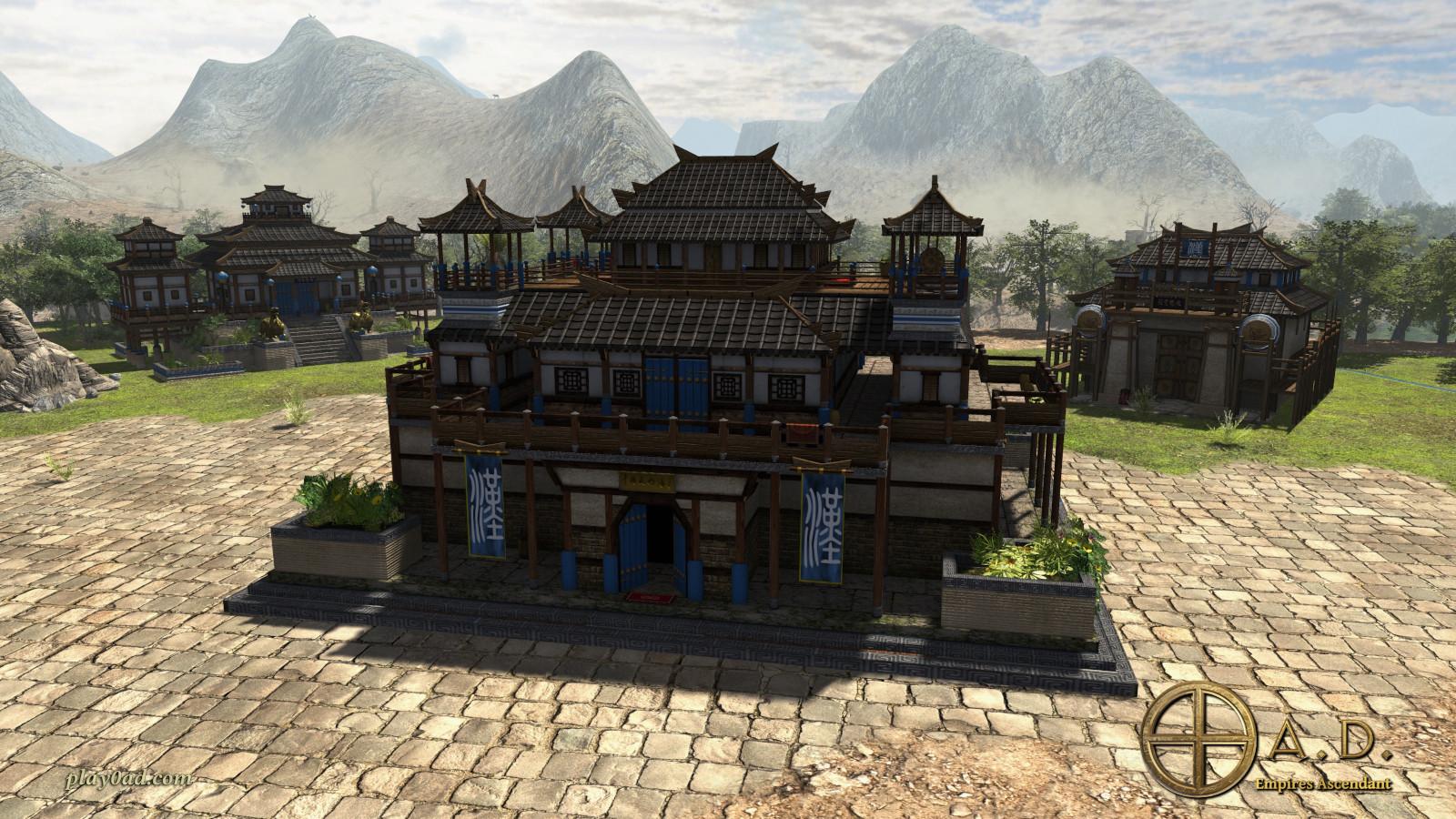
0 A.D. (2010) is a free, open-source RTS by Wildfire Games set in the ancient world. Players develop civilizations, manage resources, build armies, and command factions including the Athenians, Spartans, and Macedonians.
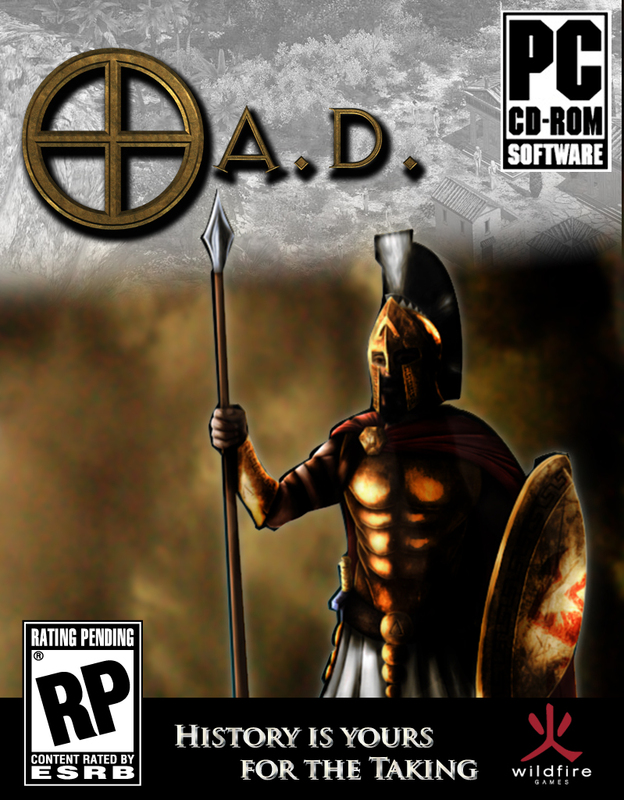
0 A.D. Cover
Information
Type: Video Games με θέμα την Ελλάδα
Developer: Wildfire Games
Publisher: Wildfire Games
Release Date: 2010
Platform (OS): Linux, macOS, Windows
Genre: Strategy
Website: Visit the website
Tags
About the Game
0 A.D., also known as 0 A.D. Empires Ascendant, is a free and open-source real-time strategy game developed by the international volunteer team Wildfire Games. The project began in 2001 as a concept for a large modification of Age of Empires II: The Age of Kings, but the developers soon decided to turn it into a fully independent game.
The first publicly playable version was released on April 2, 2010, as a Pre-Alpha, followed by the first Alpha version, Alpha 1 “Argonaut,” on August 16, 2010. 0 A.D. is set in a historically inspired world covering approximately the period from 500 BC to 500 AD. The game's title refers to the nonexistent “year zero” between BC and AD and represents the project's alternate-history concept: what might have happened if major ancient civilizations had faced one another when each was at the height of its power? Players take control of one of the game's civilizations and begin with a small settlement. The core objective is to gather resources, develop an economy, construct buildings, research technologies, and raise a military force. Resources are required for expanding settlements, producing units, constructing infrastructure, and researching technologies.
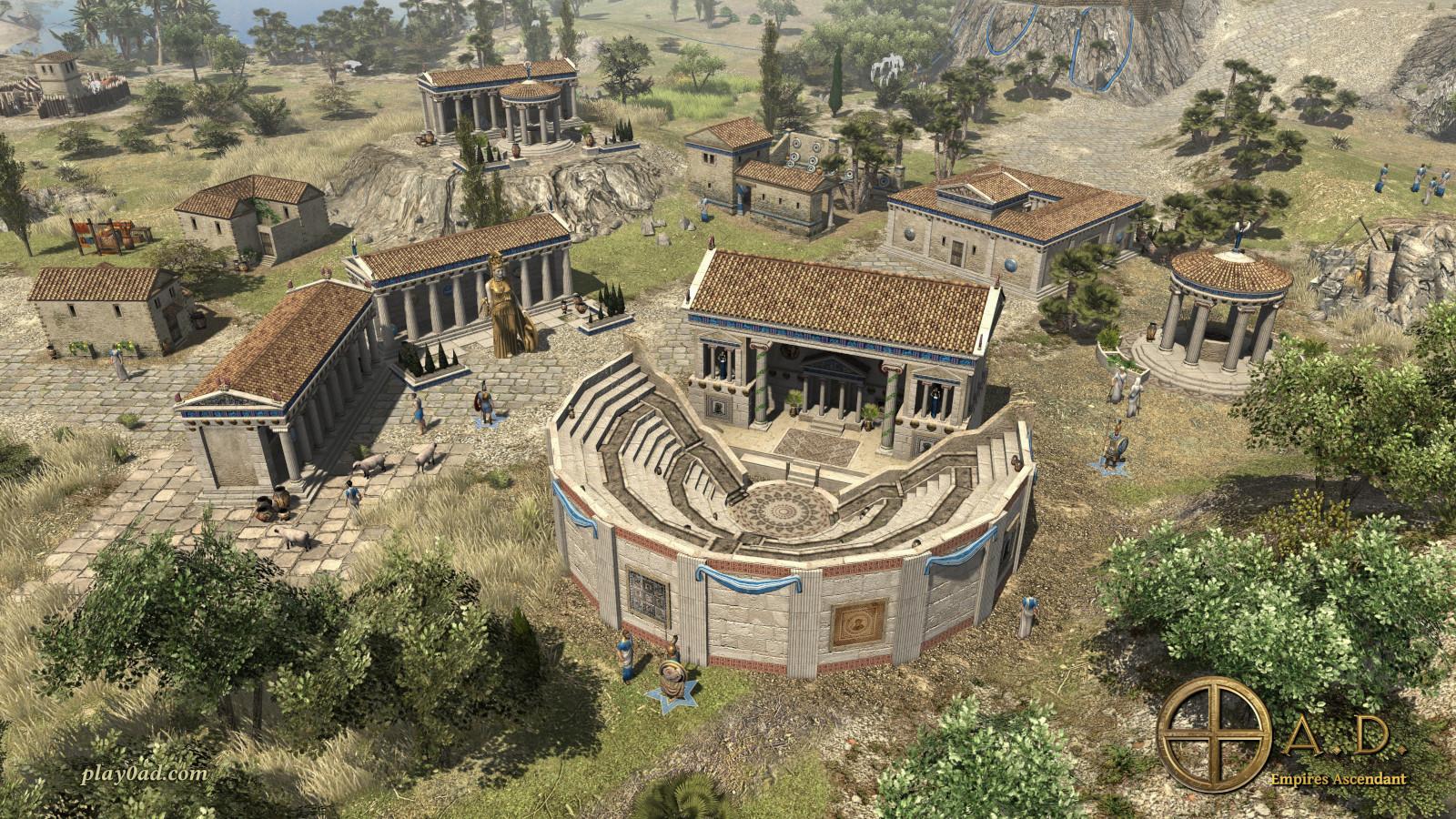
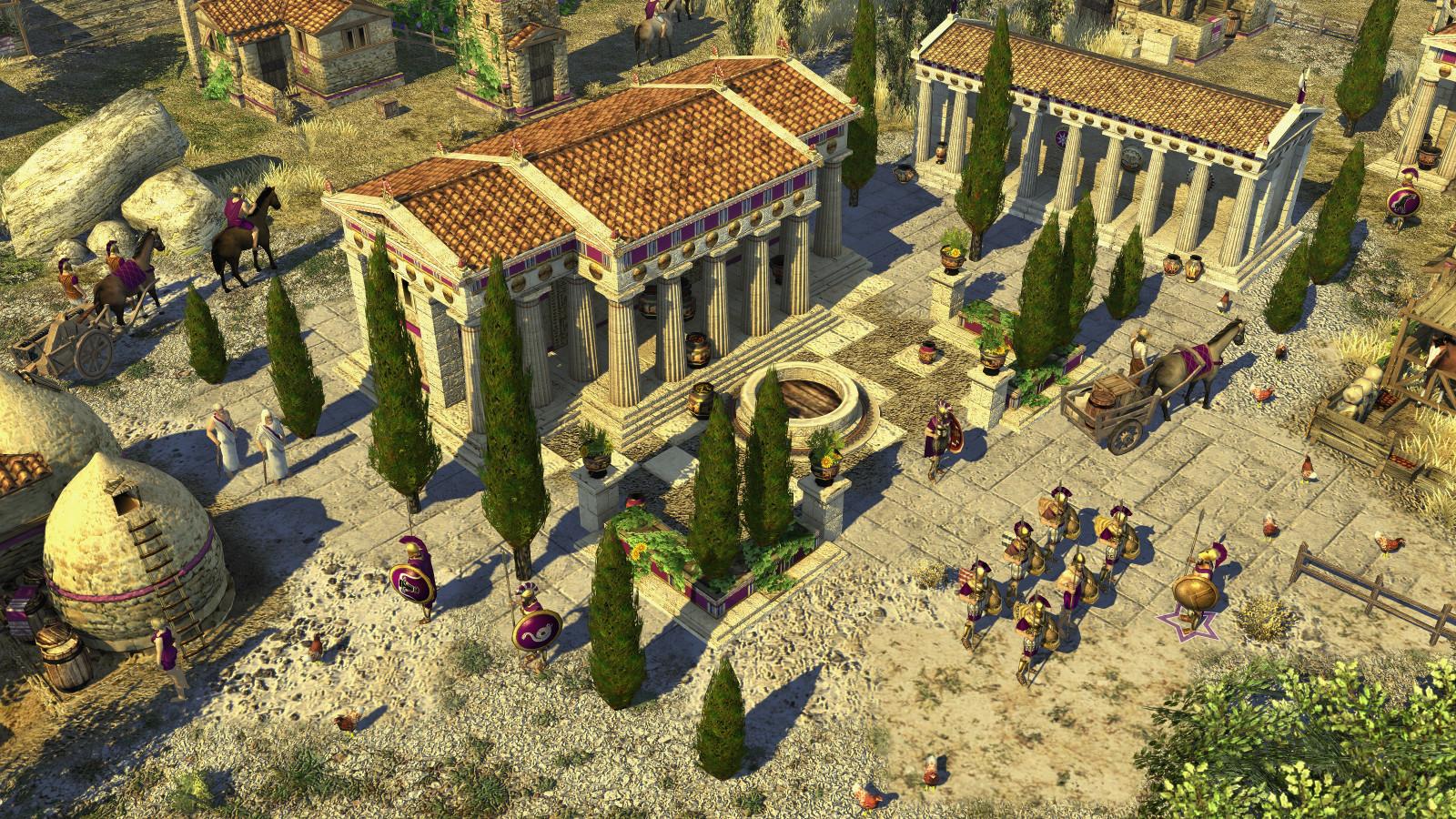
Gameplay follows the traditions of classic RTS games while placing considerable emphasis on the historical identity of each civilization. Factions possess different units, buildings, technologies, and characteristics, while military forces can be used for both offensive and defensive operations. Economic management is just as important as warfare, since maintaining a large army requires a stable supply of resources. Historical authenticity is an important part of the game's design. Units, buildings, weapons, architecture, and cultural characteristics are based on historical sources and archaeological evidence wherever possible within the framework of a strategy game. Over the course of the project's development, the team has received input from people with historical and archaeological knowledge in an effort to portray the ancient civilizations as consistently as possible.
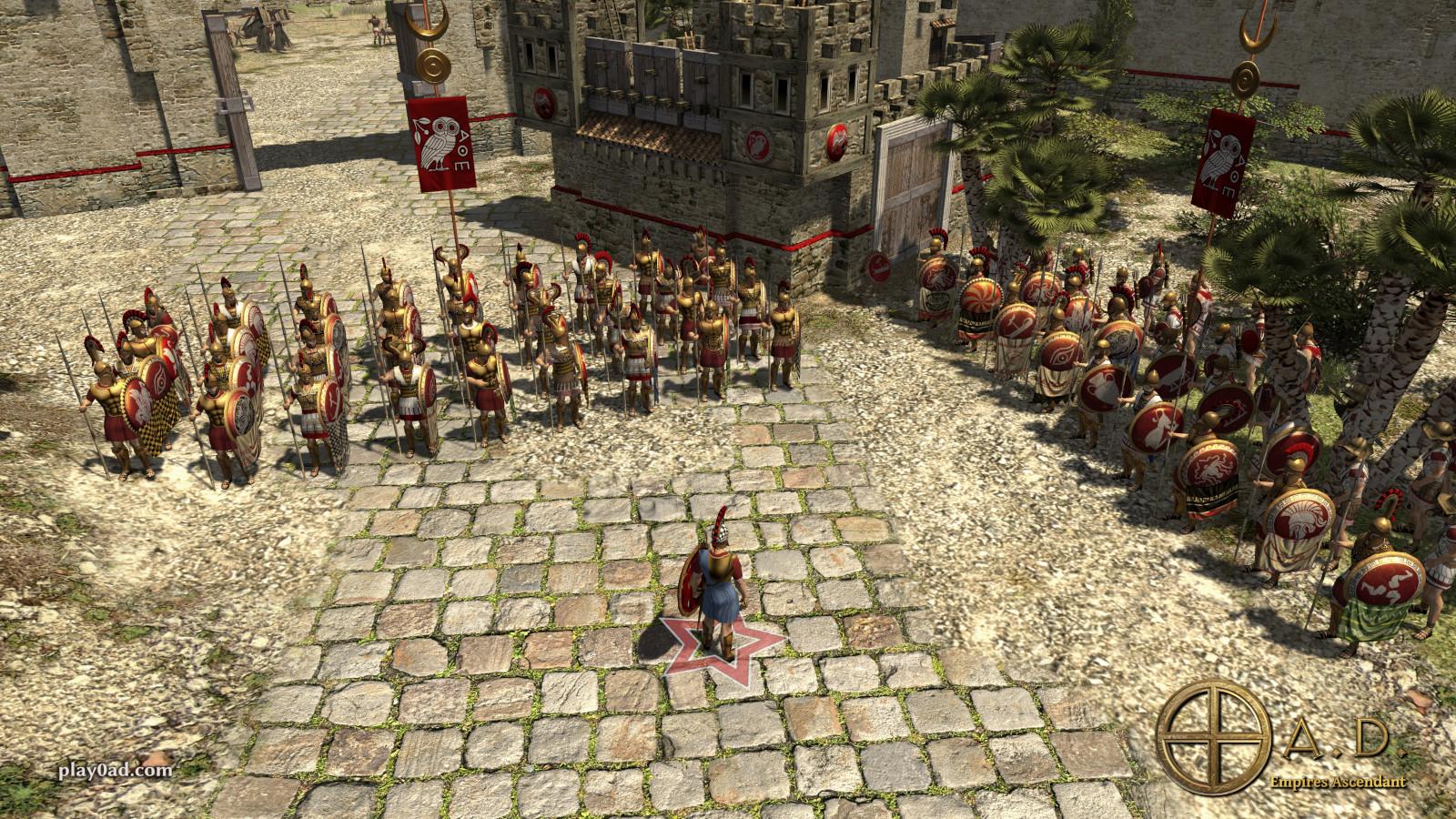
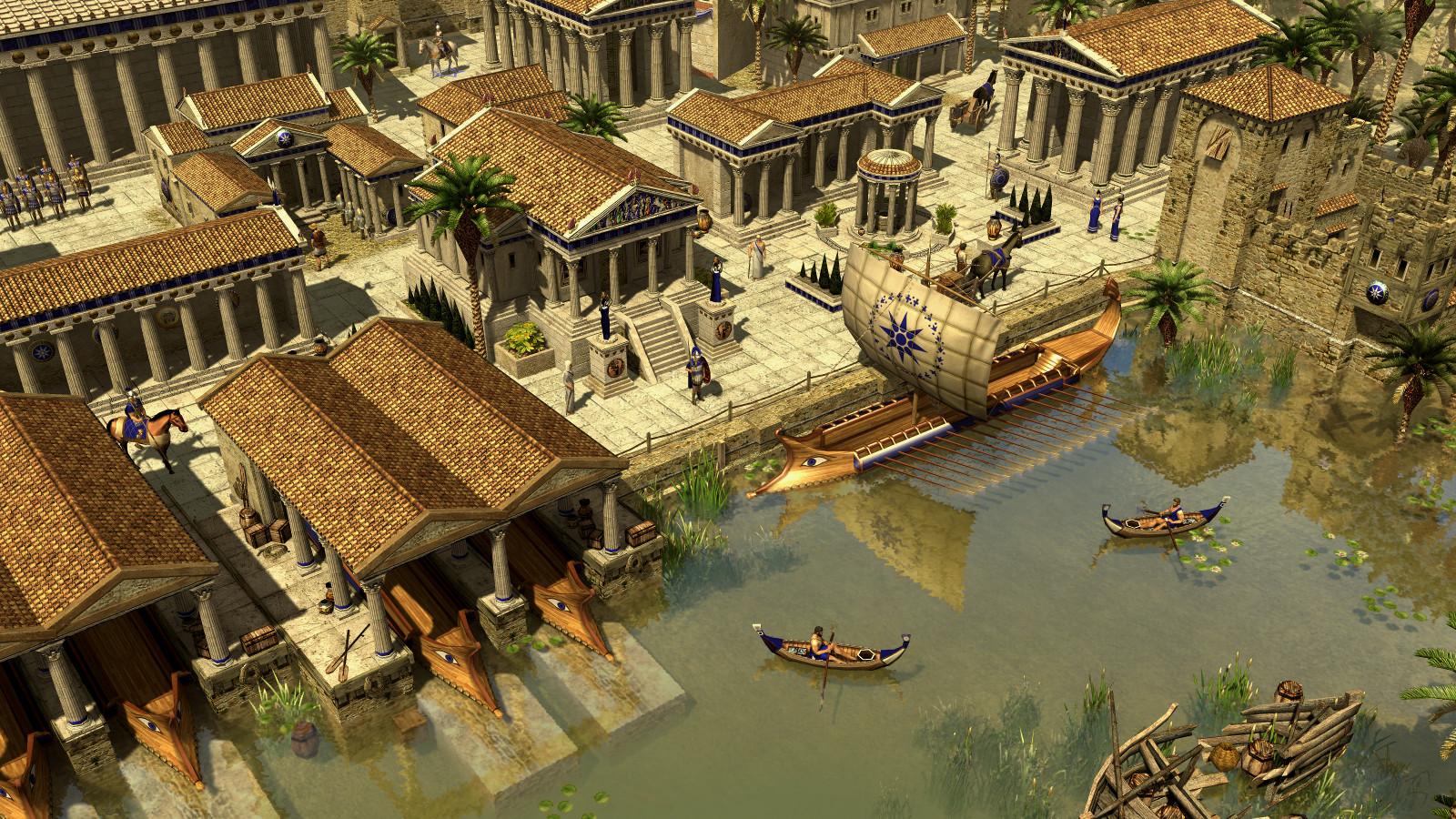
Ancient Greece is a major part of the game. The Greek factions include the Athenians, Spartans, and Macedonians, while later versions also introduced Hellenistic civilizations such as the Seleucids and Ptolemaic Egyptians. The distinction between Greek city-states and Hellenistic kingdoms allows the game to represent different military and political traditions within the ancient Greek world. The Athenians reflect the historical importance of Athens and its naval tradition, while the Spartans emphasize powerful land forces and military organization. The Macedonians, meanwhile, combine infantry, cavalry, and military formations associated with the Macedonian kingdom and the era of Alexander the Great. The Greek connection extends beyond playable factions. The game includes environments inspired by the Greek world, with maps such as Hellas and Dodecanese. Different maps represent a variety of geographical environments, including fertile plains, forests, coastlines, and islands, creating different strategic conditions for players. Combat forms the center of the military gameplay.
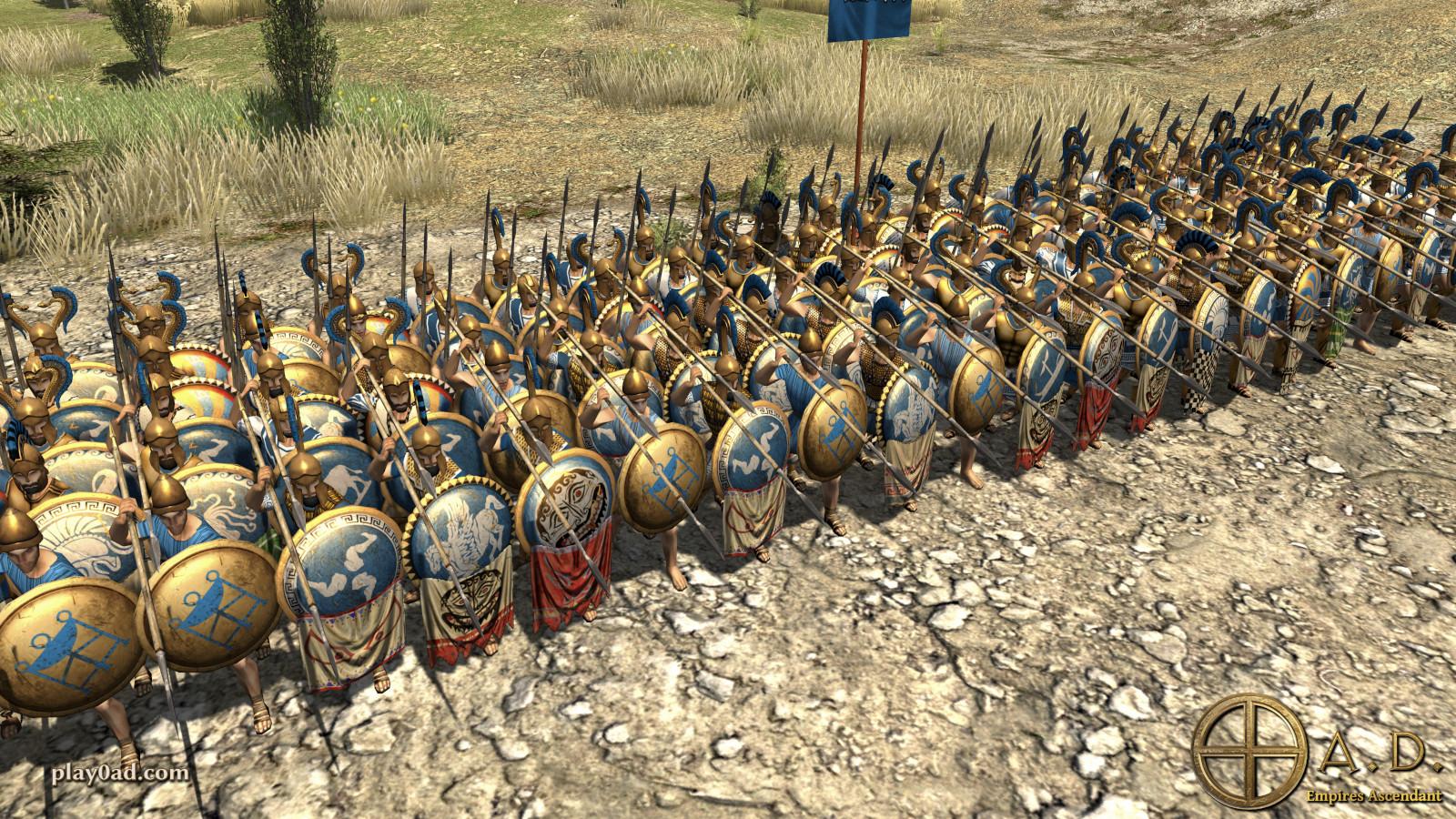
Depending on the chosen civilization, players can field infantry, cavalry, archers, siege weapons, and naval units. Unit formations, battlefield positioning, and the effective use of different troop types can determine the outcome of large engagements. Technological development is another important part of the experience. Civilizations can research technologies during a match, allowing their economies and armies to become more advanced. Economic development, military technology, and territorial expansion are closely connected, creating a progression system in which decisions made early in a match can influence the outcome of later battles. 0 A.D. supports single-player and multiplayer gameplay, as well as skirmish matches across a variety of maps. Because the game is open source, its development has continued for many years through contributions from volunteers around the world. The source code is released under the GNU GPL, while the artwork is distributed under Creative Commons licensing, allowing the project and its content to be freely used, modified, and redistributed under the applicable terms. The project remains in active development.
Over the years, 0 A.D. has progressed through numerous Alpha releases, adding civilizations, maps, units, artificial intelligence improvements, graphical enhancements, and multiplayer features. Release 28 “Boiorix” was released in February 2026 and is the latest official release at the time of writing. Although 0 A.D. is not a Greek-developed game, it has a strong connection to Greece and is highly relevant to a database documenting games related to the country. The inclusion of Athenians, Spartans, and Macedonians, its depiction of the ancient Greek world, and its Greek-inspired maps and civilizations make it one of the most notable modern RTS games to feature ancient Greece as a significant part of its historical setting.
0 A.D. Trailer
0 A.D. Gallery