

Zeus: Master of Olympus
Zeus: Master of Olympus (2000) is a city-building strategy game in which players establish and manage Ancient Greek city-states while overseeing their economy, trade, religion, and interactions with gods, heroes, and mythical creatures.
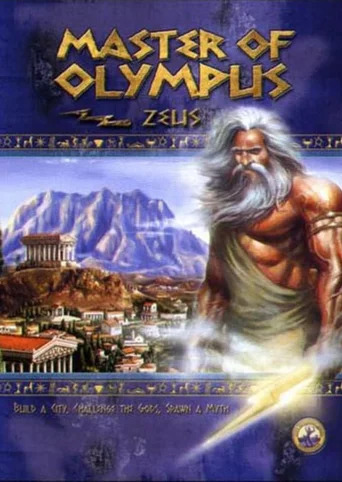
Zeus: Master of Olympus Cover
Information
Type: Video Games με θέμα την Ελλάδα
Release Date: 2000
Developer: Impressions Games
Publisher: Sierra Studios
Genre: Strategy
Platform (OS): Windows
About the Game
Released in 2000, Zeus: Master of Olympus was developed by Impressions Games and published by Sierra Studios. It is a city-building strategy game set in Ancient Greece, combining historical themes with Greek mythology. As part of Impressions Games' city-building series, it builds upon the mechanics of titles such as Caesar III and Pharaoh while adapting them to the political, economic, and religious structure of the Greek city-state.
Players assume the role of a ruler responsible for founding and developing a prosperous Greek polis. Every aspect of city management falls under the player's control, including urban planning, food production, industry, commerce, housing, public services, defense, and diplomacy. Creating a stable and flourishing settlement requires careful planning and a balance between economic growth and the needs of the population.
The main campaign is divided into individual adventures inspired by famous legends of Greek mythology. Throughout the game, players participate in stories involving heroes such as Heracles, Jason, Perseus, Odysseus, and Theseus. Rather than presenting a single continuous narrative, each scenario focuses on a different myth, requiring the player's city to provide resources, support legendary quests, or overcome mythological challenges.
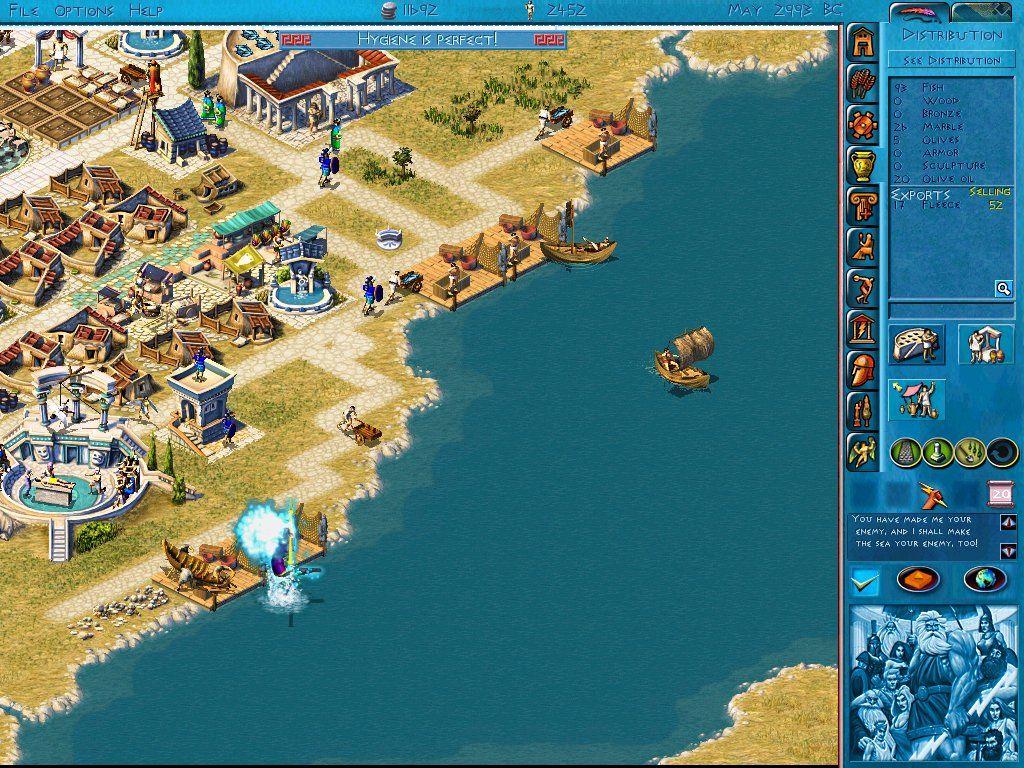
Gameplay revolves around constructing and maintaining a fully functional city. Citizens require housing, food, clean water, healthcare, education, entertainment, and employment in order to prosper. Players build roads, marketplaces, farms, workshops, warehouses, docks, and public buildings while organizing production chains for resources such as olive oil, wine, timber, fleece, bronze, and marble. Successful trade with neighboring city-states plays a crucial role in expanding the economy and obtaining valuable materials unavailable locally.
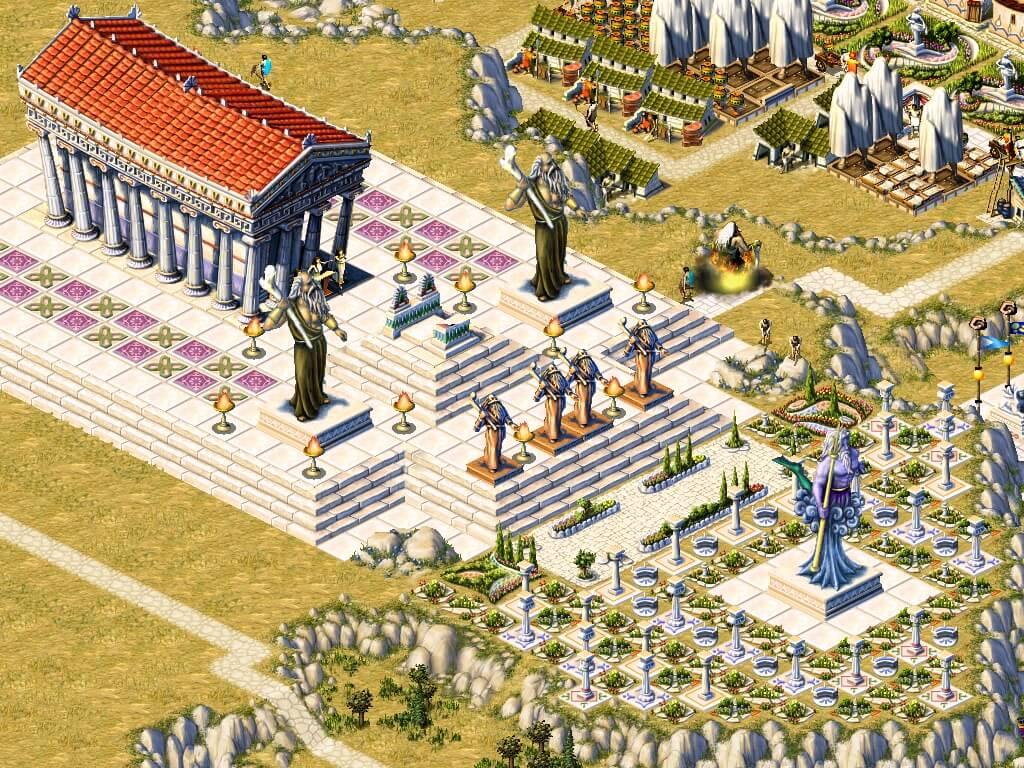
Religion is one of the game's defining mechanics. The Olympian gods actively observe the city's development and respond according to the level of worship they receive. By constructing sanctuaries, temples, and grand temples dedicated to deities including Zeus, Athena, Poseidon, Artemis, Ares, Aphrodite, Hermes, Dionysus, Demeter, and Hephaestus, players may earn divine blessings. The gods can physically visit the city, providing powerful benefits or helping resolve crises affecting the population.
Greek mythology also plays a direct role through legendary heroes and monsters. Creatures such as the Lernaean Hydra, Medusa, the Minotaur, Cerberus, and Scylla may threaten the city, causing destruction and disrupting daily life. To defeat these monsters, players must fulfill specific conditions that attract famous heroes, who undertake legendary battles on behalf of the city.
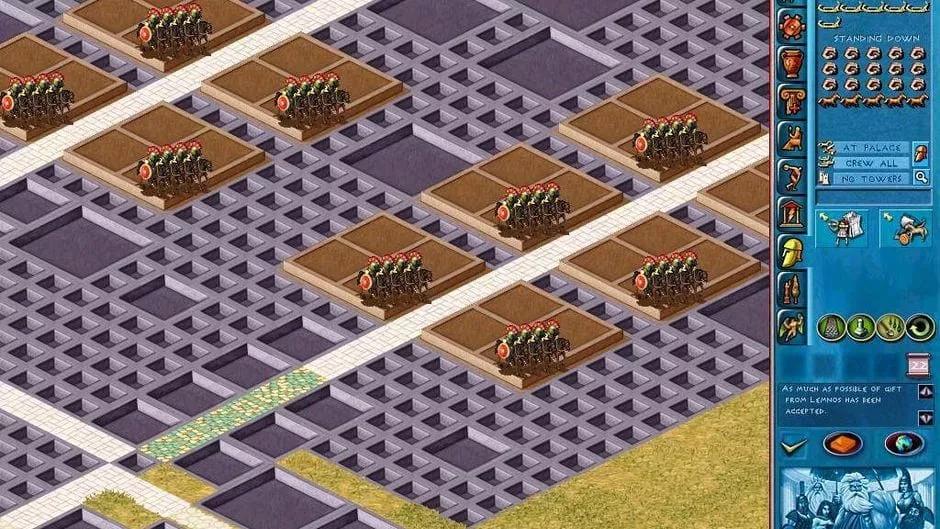
Diplomacy and international relations are handled through the world map, where players establish alliances, exchange gifts, trade resources, pay tribute when necessary, and occasionally wage war against rival city-states. Although military conflicts exist, the primary focus remains on economic management, urban development, and maintaining a prosperous civilization.
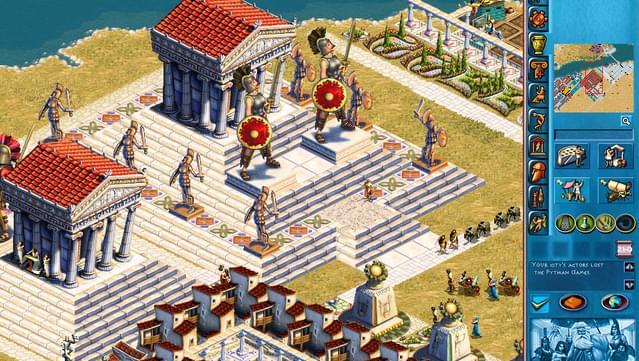
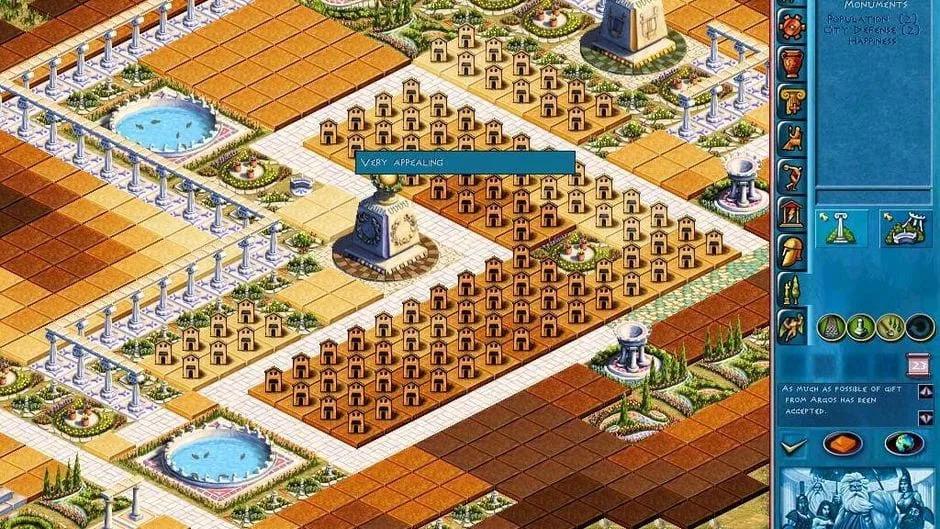
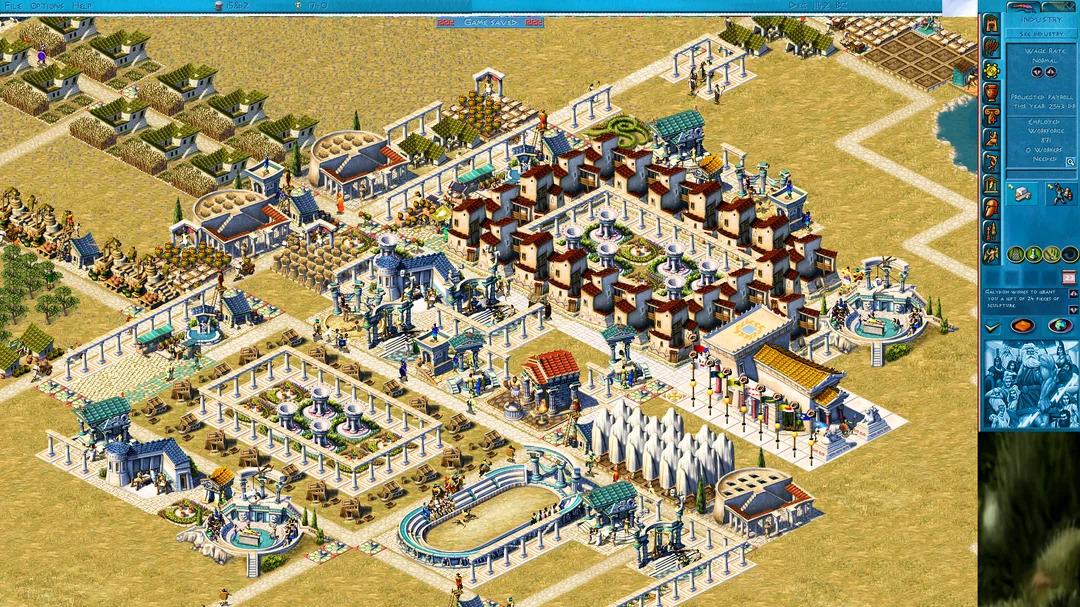
The game's visual presentation faithfully recreates the atmosphere of Ancient Greece through detailed isometric artwork. Temples, agoras, theaters, gymnasiums, stadiums, workshops, ports, and residential districts form vibrant cities filled with animated citizens carrying out their daily routines. This handcrafted two-dimensional art style remains one of the game's defining visual characteristics.
Zeus: Master of Olympus stands as one of the most comprehensive city-building games inspired by Greek civilization and mythology. By combining urban planning, economic management, diplomacy, and legendary myths within a single experience, it offers a detailed interpretation of life in Ancient Greece while celebrating its gods, heroes, and enduring cultural legacy.
Zeus: Master of Olympus Trailer
Zeus: Master of Olympus Gallery