

Populous II: Trials of the Olympian Gods
Populous II: Trials of the Olympian Gods (1991) is a strategy god game inspired by Greek mythology. Players assume the role of a demigod, wielding divine powers to lead their followers and challenge the Olympian gods.
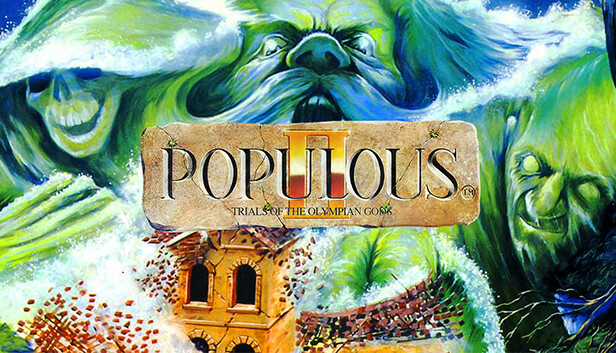
Populous II: Trials of the Olympian Gods Cover
Information
Type: Video Games με θέμα την Ελλάδα
Developer: Bullfrog Productions
Publisher: Electronic Arts
Genre: Strategy
Platform (OS): AmigaOS, Atari ST, macOS, Mega Drive, MS-DOS, SNES, Windows
Release Date: 1991
Website: Visit the website
About the Game
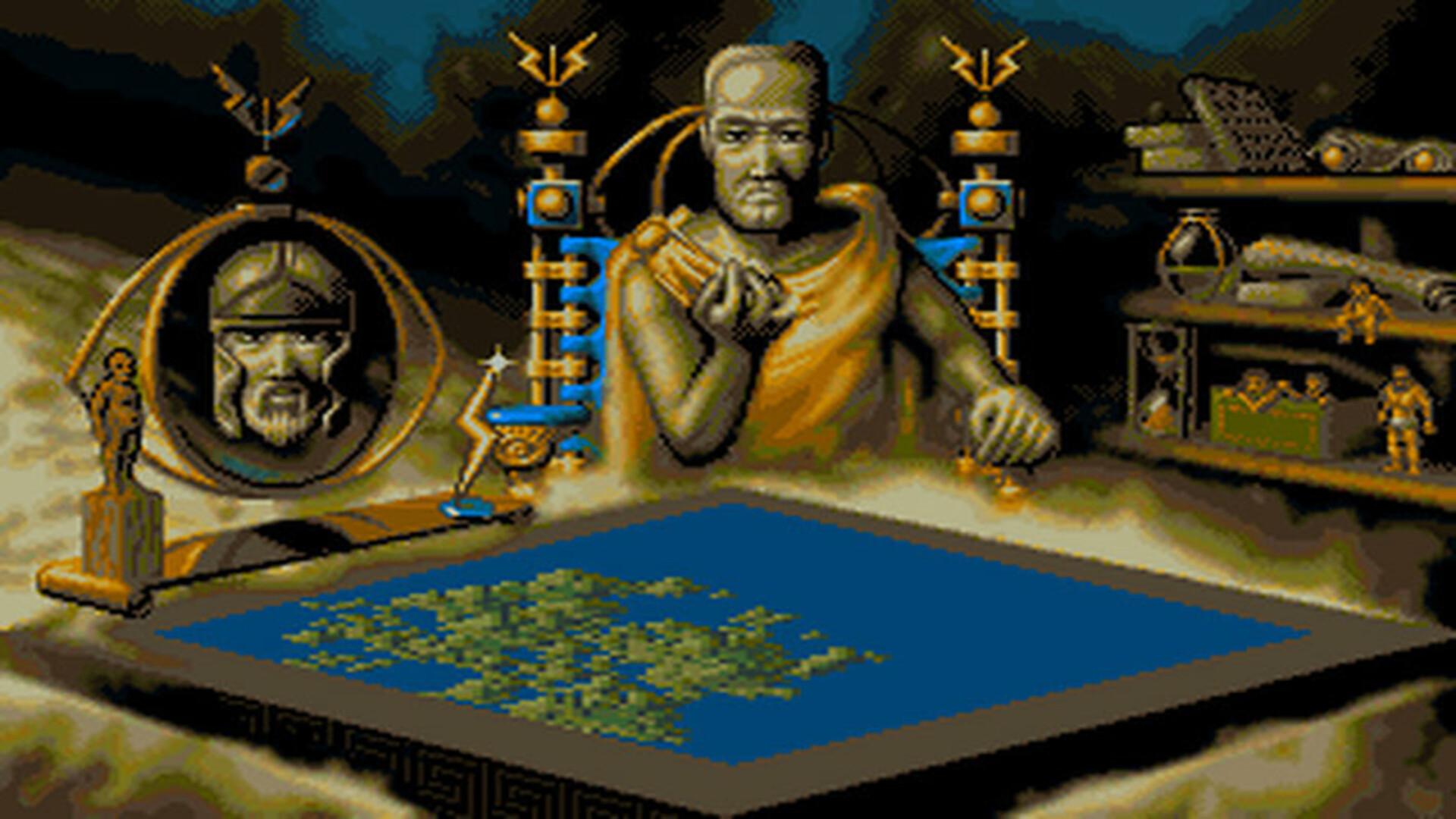
Released in 1991, Populous II: Trials of the Olympian Gods was developed by Bullfrog Productions and published by Electronic Arts. It is the second entry in the Populous series and one of the defining examples of the god game genre. Unlike its predecessor, which featured a more abstract setting, Populous II is built entirely around Greek mythology, placing players in the role of a divine being seeking a place among the Olympian gods.
Players assume the role of a demigod, born from Zeus and a mortal woman. To earn immortality and a rightful place on Mount Olympus, they must defeat the most powerful deities of the Greek pantheon through a series of increasingly difficult trials. Each scenario represents a confrontation against another Olympian god, culminating in a final challenge against Zeus himself.
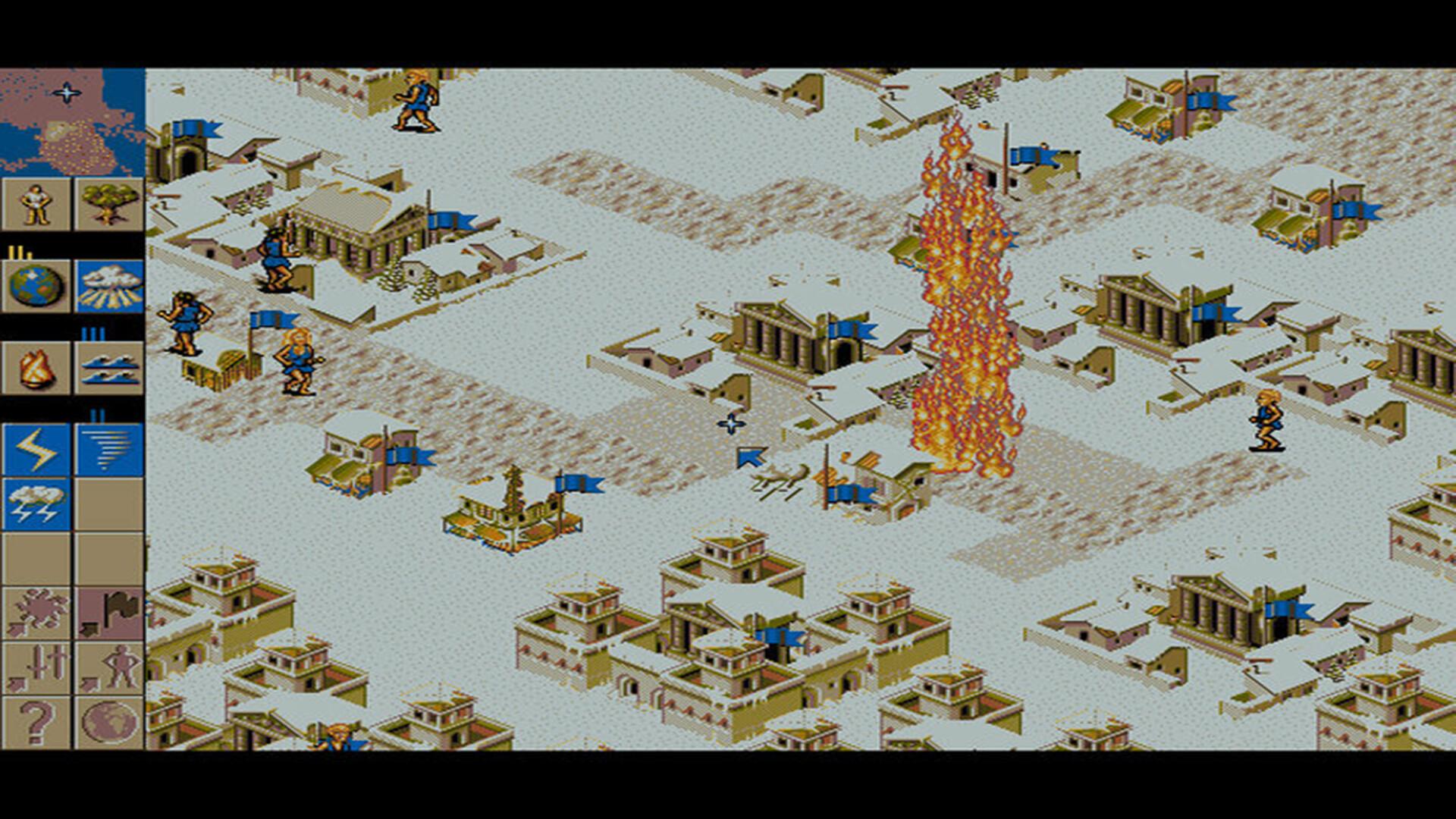
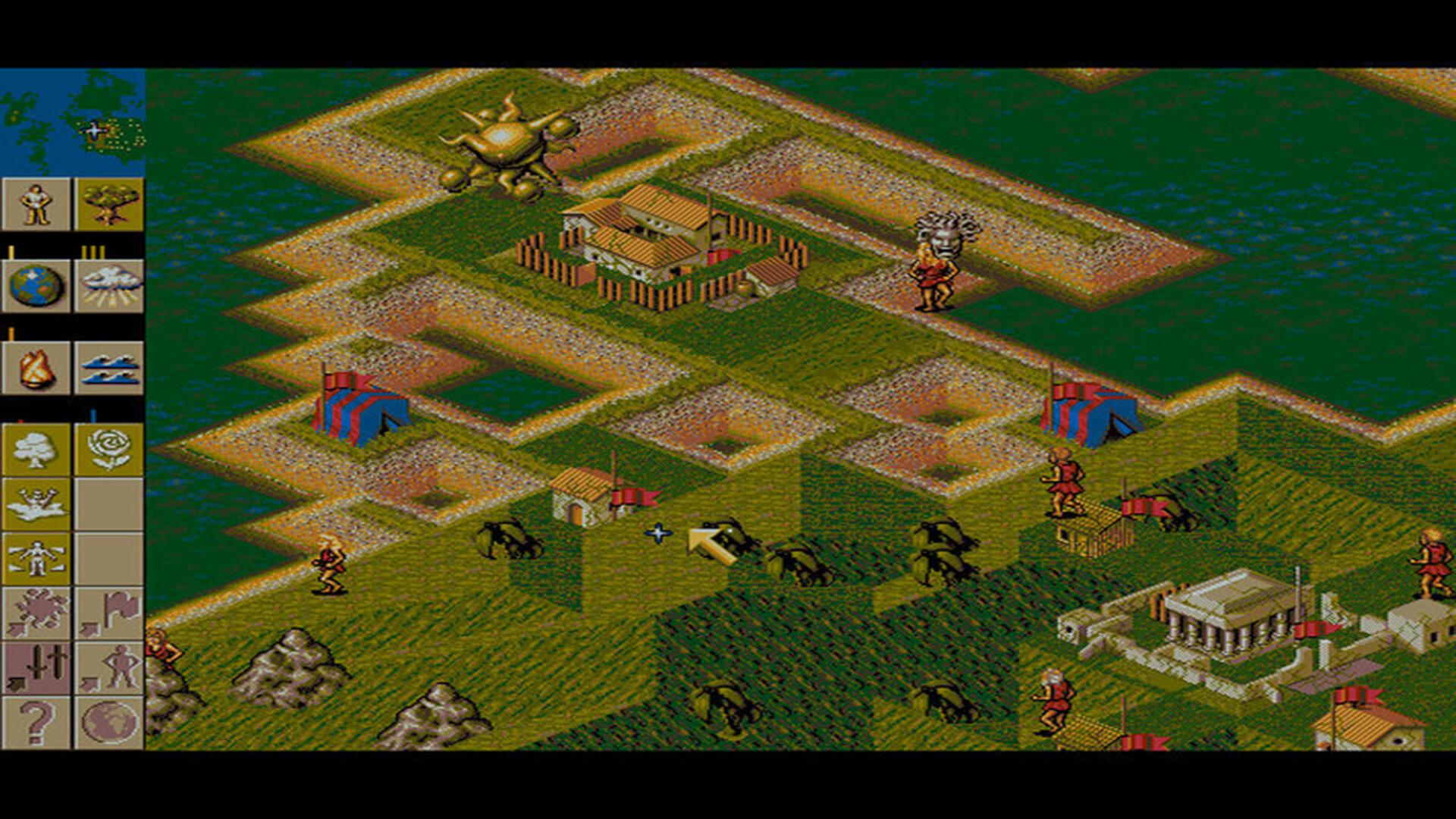
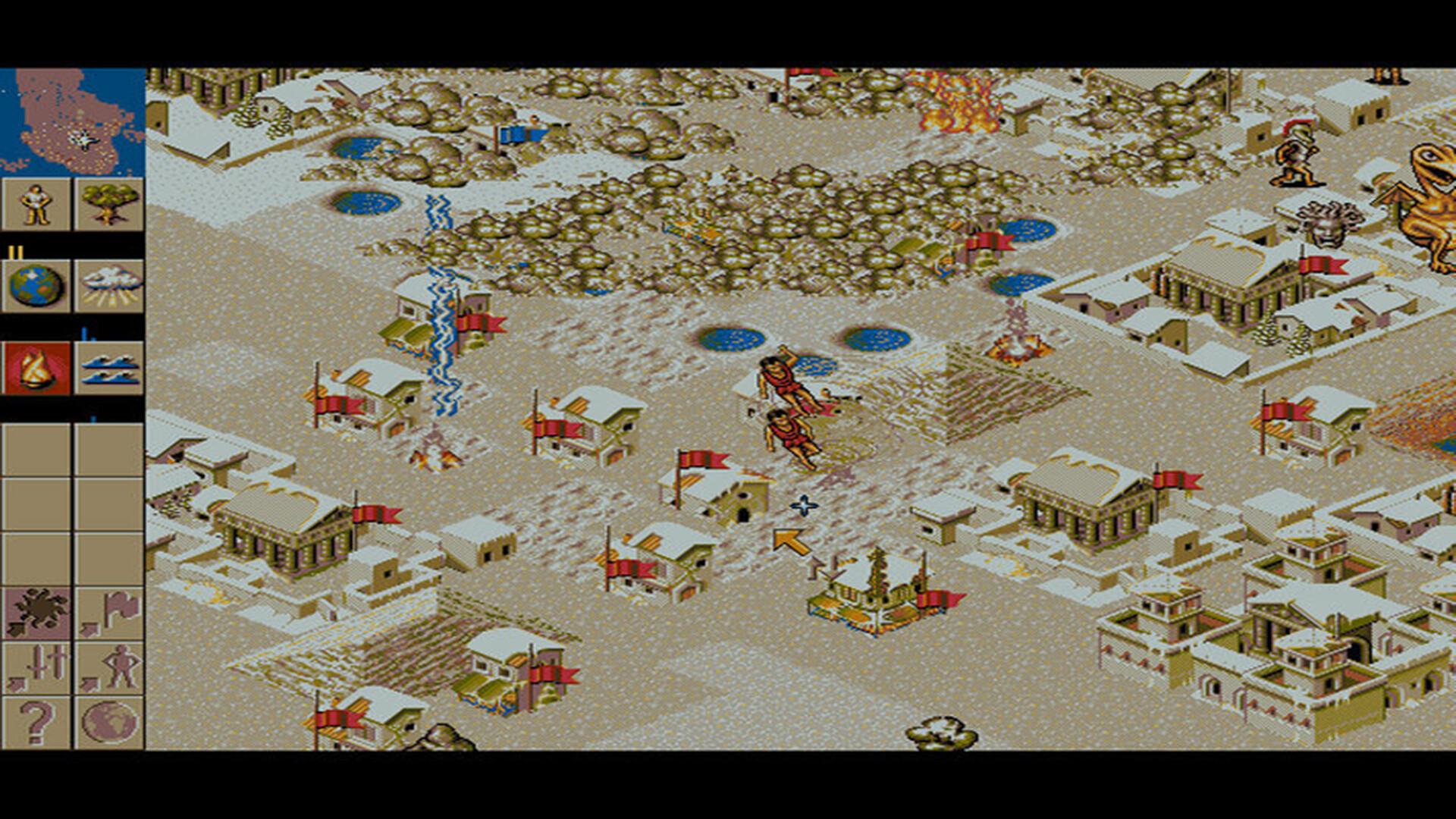
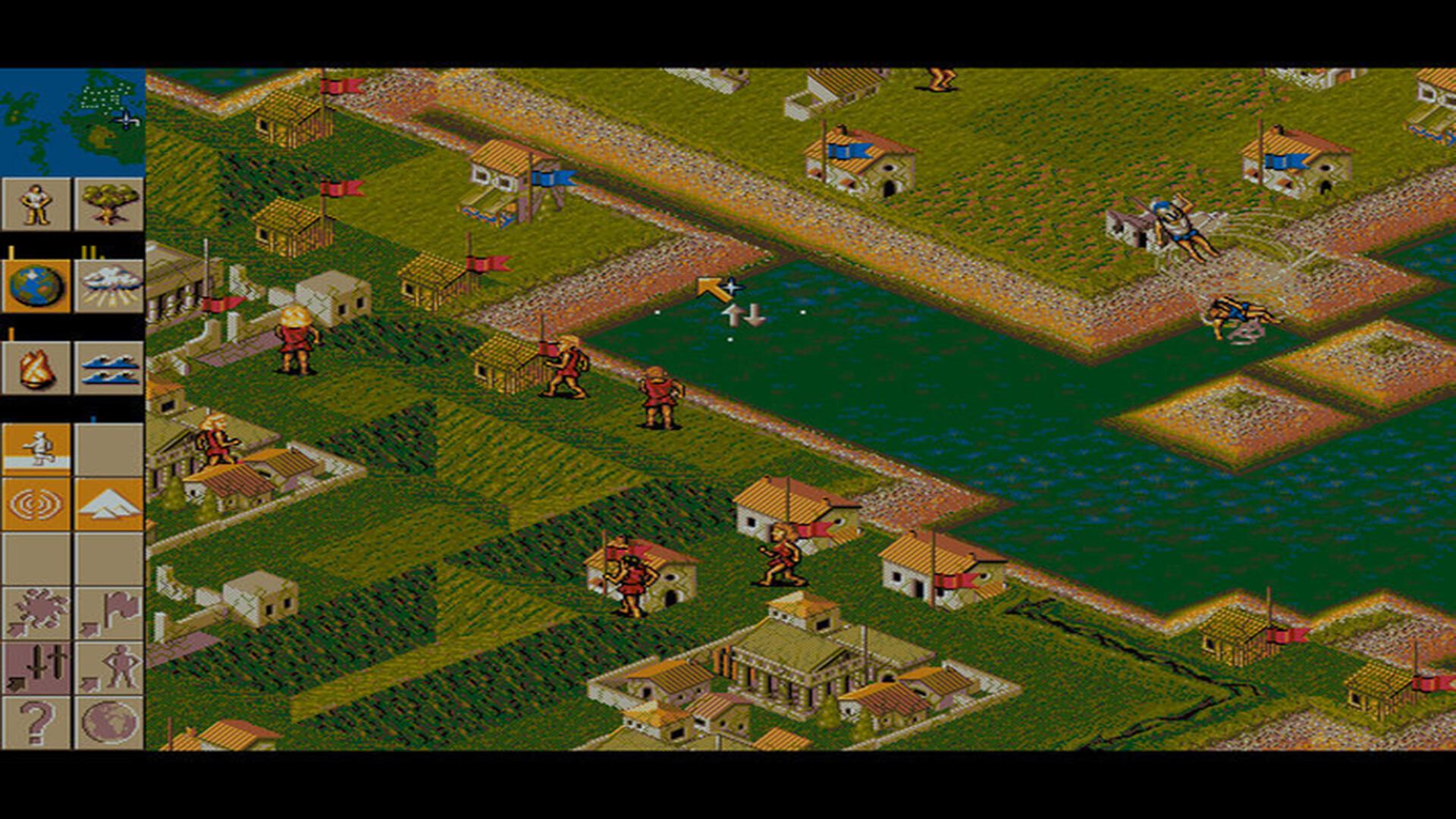
Gameplay takes place on small island maps where two civilizations compete for dominance. Rather than controlling individual units directly, players influence the battlefield through divine intervention. Their followers automatically establish settlements, expand their territory, and engage enemy tribes, while the player's responsibility is to shape the environment, protect their people, and unleash supernatural powers at critical moments.
A defining feature of the game is its extensive collection of divine powers. As players progress through the campaign, they unlock dozens of miracles inspired by the forces of nature and the Olympian gods. Lightning bolts, earthquakes, volcanoes, whirlwinds, tidal waves, floods, firestorms, forests, and swamps can all be used strategically to defend settlements, reshape the landscape, or devastate enemy civilizations. Every miracle consumes divine energy, requiring careful management of the player's available power throughout each battle.
Greek mythology extends beyond the Olympian gods through the appearance of legendary heroes and mythical creatures. Players can summon famous heroes such as Heracles, Perseus, and Odysseus, each providing unique support on the battlefield. Mythical monsters, including the Lernaean Hydra, also appear during certain scenarios, adding additional strategic challenges and reinforcing the game's mythological setting.
The campaign consists of numerous missions that gradually introduce new divine abilities, more complex terrain, and increasingly powerful opponents. Geography plays an important strategic role, as mountains, rivers, coastlines, and islands influence population growth, expansion, and military conflicts. Success depends not only on destroying enemies but also on creating favorable conditions for the player's own civilization to prosper.
Visually, Populous II retains the isometric presentation of the original game while introducing a much stronger mythological identity. Temples, shrines, Greek islands, statues, and symbols associated with the Olympian gods create an atmosphere inspired by Ancient Greece, while the visual effects accompanying divine miracles reinforce the player's role as a supernatural ruler.
Populous II: Trials of the Olympian Gods remains one of the earliest strategy games to embrace Greek mythology as its central theme. Rather than retelling a specific legend, it uses the Olympian pantheon, legendary heroes, and mythical creatures as the foundation for a unique strategy experience in which players rise from demigod to deity by proving themselves worthy of Mount Olympus.
Populous II: Trials of the Olympian Gods Gallery